Automation vs AI Workflows vs AI Agents: Understanding the Key Differences
2026 is around the corner and most people still don't get the difference between an automation, an AI workflow and an AI agent. Learn the three key differences that matter.
Jan 14, 2025
4 min read
Alexandre Kantjas
2026 is around the corner and most people still don't get the difference between an automation, an AI workflow and an AI agent. Learn the three key differences that matter.
Automation vs AI Workflows vs AI Agents: Understanding the Key Differences
2026 is around the corner and most people still don't get the difference between an automation, an AI workflow and an AI agent. So let's recap:
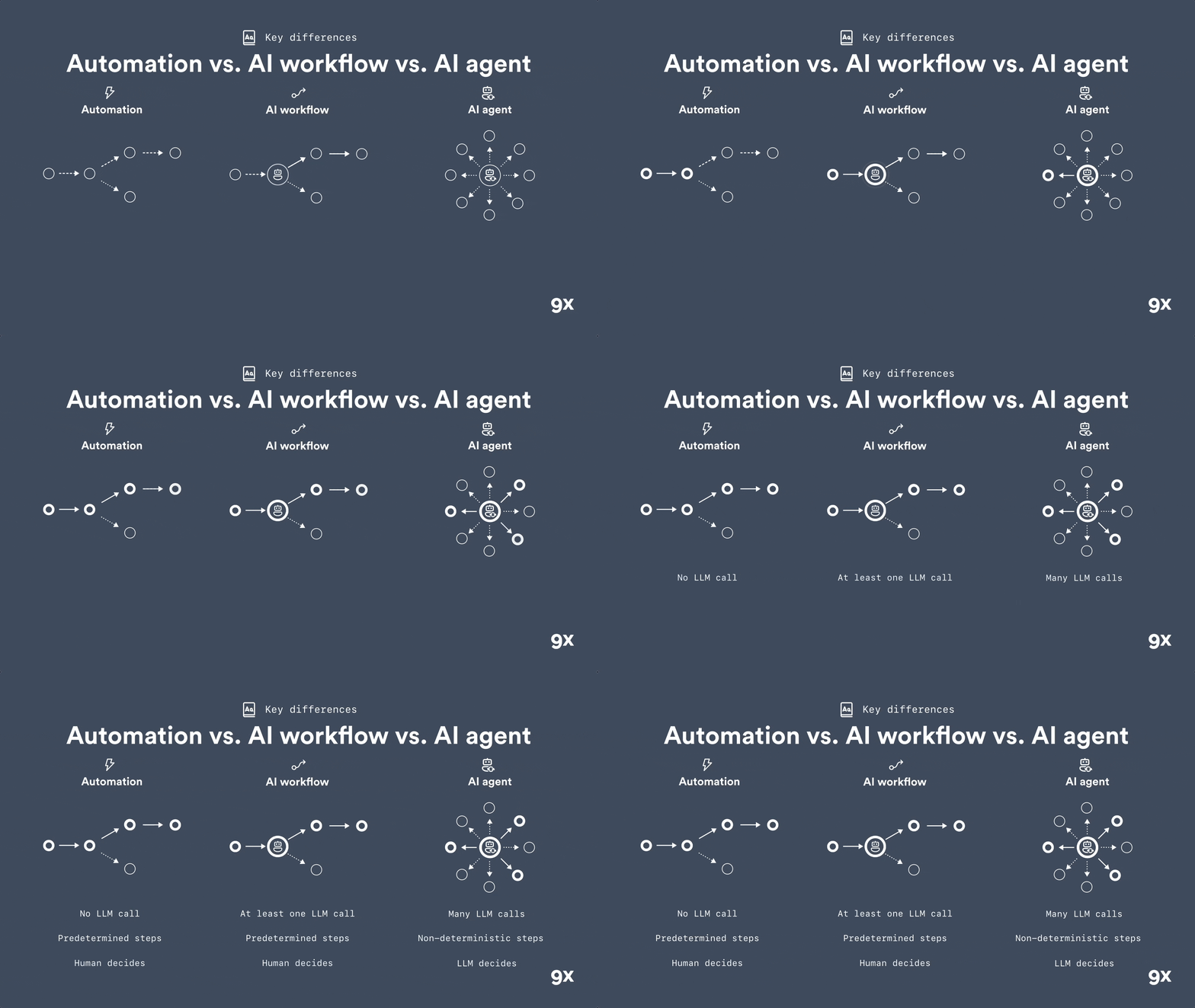
→ Automations execute predefined, rule-based tasks automatically. → AI workflows are automations that call LLMs for one or more steps. → AI agents perform non-deterministic tasks autonomously.
At the core this means there are three key differences:
1. LLM Calls
Automations have zero LLM calls. They operate purely on predefined rules and logic without any AI involvement.
AI workflows call an LLM at least once during their execution. These calls are integrated into specific steps of the workflow.
AI agents call LLMs several times - at every step. The AI is continuously involved in the decision-making process throughout the entire operation.
2. Execution Steps
Automations and AI workflows both follow predetermined paths. The sequence of operations is defined in advance and doesn't change during execution.
AI agents figure out the path on the fly. They dynamically determine the next steps based on the current context and previous results.
3. Decision-Making
With both automations and AI workflows, HUMANS decide what happens. The logic, rules, and workflow steps are all predetermined by human developers.
With AI agents, the LLM decides what happens. The AI makes autonomous decisions about how to proceed at each step.
Why These Differences Matter
These differences matter significantly when choosing the right approach for your business needs. If you can solve it with an automation or an AI workflow - you shouldn't build an agent.
Most processes do not need an agent to be automated. Agents add complexity, unpredictability, and cost that may not be necessary for straightforward, well-defined tasks.
When to Use Each Approach
Use Automations when:
- The process is completely rule-based
- Steps are always the same
- No AI interpretation is needed
- Predictability is crucial
Use AI Workflows when:
- You need AI for specific steps (like content generation or analysis)
- The overall process flow is predictable
- You want to combine AI capabilities with traditional automation
- You need some intelligence but want to maintain control
Use AI Agents when:
- The task requires complex reasoning at multiple steps
- The path to completion varies significantly based on context
- You need autonomous decision-making
- The problem is too complex for predetermined workflows
Conclusion
Understanding the distinction between automations, AI workflows, and AI agents is crucial for making informed decisions about which technology to implement. Each has its place in modern business operations, and choosing the right one depends on your specific needs, complexity requirements, and tolerance for autonomous decision-making.
At Oyu Intelligence, we help businesses identify the right automation approach for their needs, whether it's traditional automation, AI workflows, or AI agents.
This insight was shared by Alexandre Kantjas on LinkedIn

Read Next
Related Articles

When Poetry Becomes a Security Threat: How Adversarial Poetry Bypasses AI Safety Filters
Researchers discovered that writing malicious instructions as poetry can bypass AI safety filters in 62% of cases across 25 different language models, revealing a critical vulnerability in current AI safety measures.

AI-Powered Malware: The New Era of Self-Evolving Cyber Threats
Google's Threat Intelligence team uncovered malware using AI models like Gemini to rewrite and obfuscate code in real-time, marking a dangerous new phase in cybersecurity.
Rethinking AI Agent Communication: Should AI Agents Stop "Talking" to Each Other?
Exploring the fundamental challenges in multi-agent AI systems and why forcing agents to communicate through human language may be limiting their true potential.