Back to Projects
OYU Office AI
PROSUMER PRODUCTIVITY

OYU Office AI

OYU Office – AI

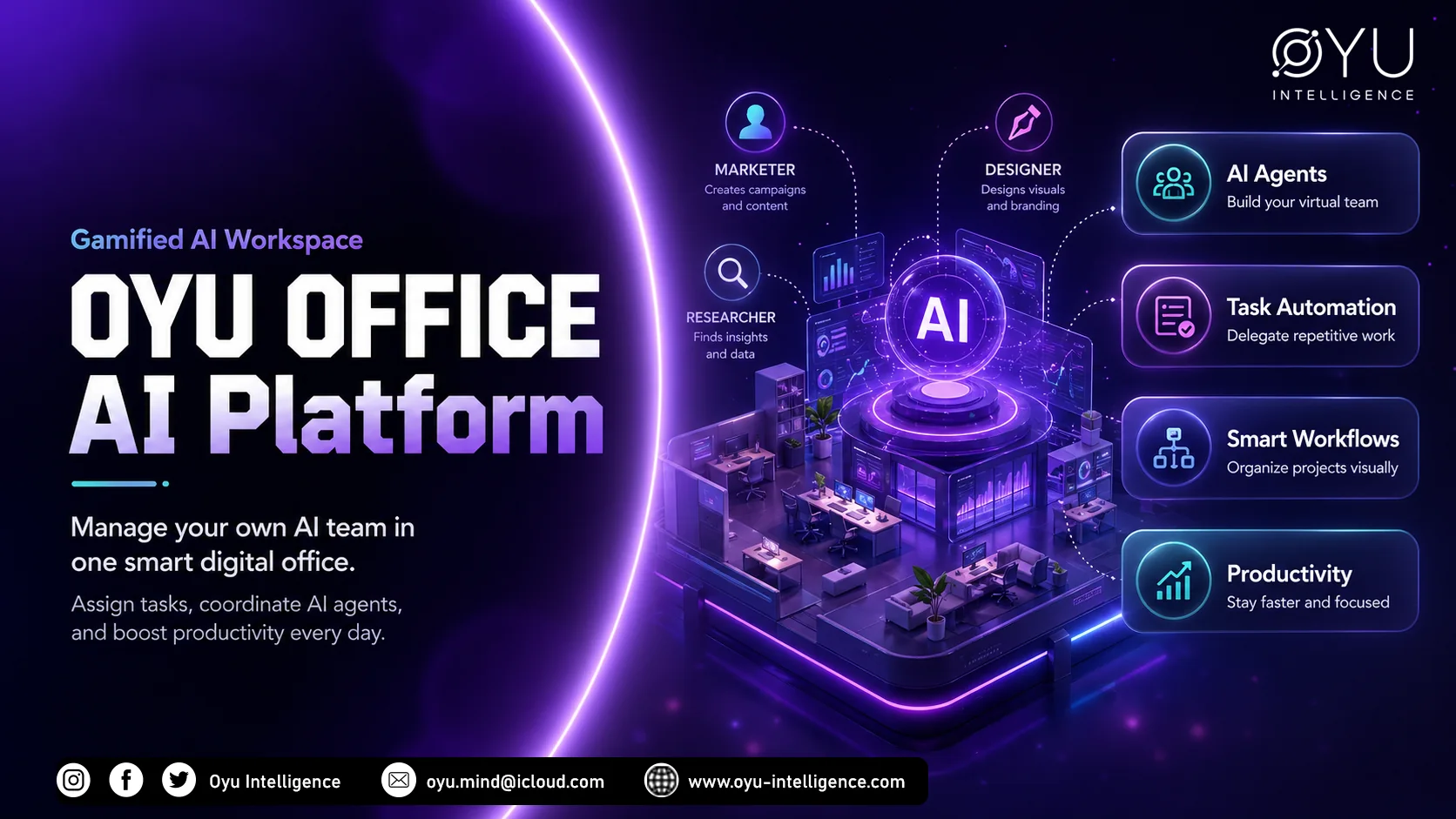
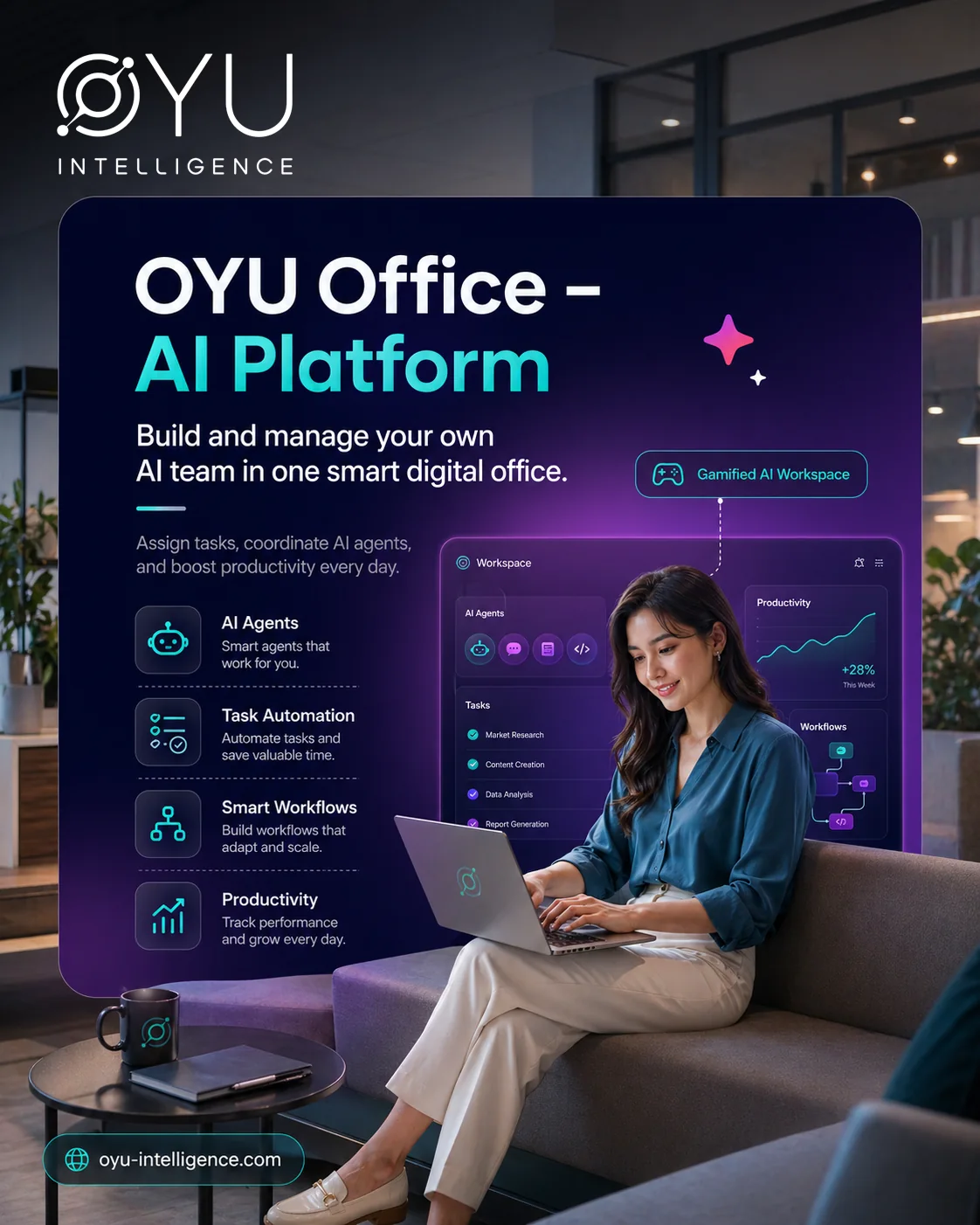
A gamified AI office where freelancers and small teams manage role-based AI workers in a visual productivity workspace.

Gamified AI office environment for freelancers, solo entrepreneurs, creators, and small business owners

Key Features

2D Office Interface

Shows AI workers inside a visual office instead of a text-only chatbot surface.

Specialized Agent Roles

Supports marketers, designers, researchers, writers, and assistants.

Visual Task Progress

Makes task assignment and progress easier to follow for non-technical users.

Project Information

Project Type and Positioning

Category: B2C / Prosumer Productivity Platform

Positioning: Gamified AI office environment for freelancers, solo entrepreneurs, creators, and small business owners

Primary Users: Freelancers, independent professionals, small business owners, and productivity-focused individuals

OYU Office – AI is positioned as a consumer and prosumer productivity platform that allows users to manage AI agents inside a visual, game-like digital office environment.

Project Overview

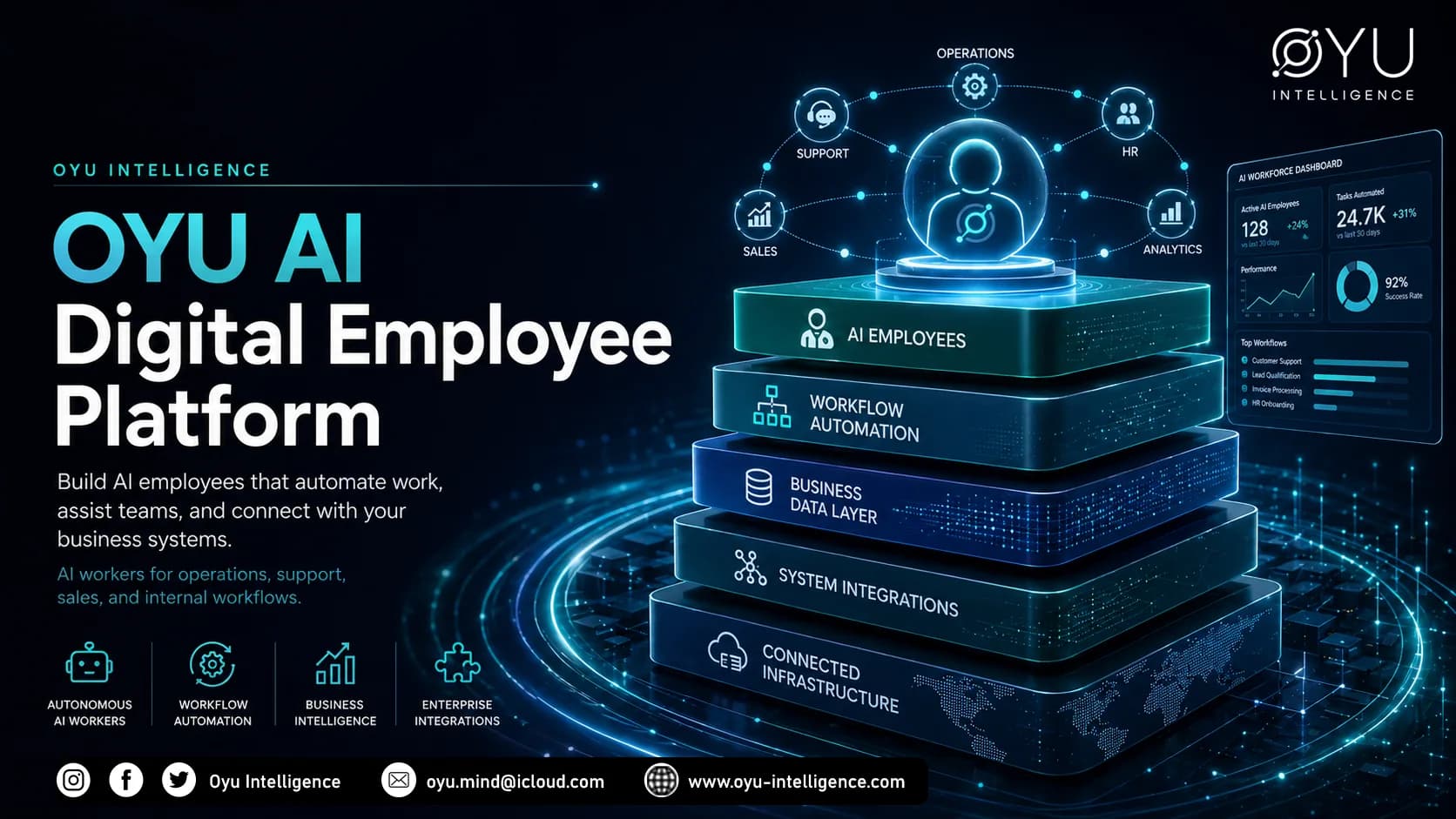
OYU Office – AI is a separate project from the enterprise-focused OYU AI – Digital Employee Platform. While the enterprise platform is designed for companies and internal systems, OYU Office – AI is designed for individuals and small professional users.

The product uses a 2D game-like user experience where users can visually see their AI agents working inside a digital office. These agents may include roles such as Marketer, Designer, Researcher, Assistant, or other specialized AI workers. Instead of presenting productivity as a traditional dashboard, OYU Office – AI makes the experience more engaging through gamification.

The platform aims to make AI-assisted work feel intuitive, visual, motivating, and enjoyable.

Problem or Opportunity Addressed

Many freelancers and small business owners need support in marketing, design, research, writing, planning, and operations, but they cannot afford to hire a full team. Existing AI tools can help, but they are often fragmented, text-heavy, and difficult to manage as part of a complete workflow.

The opportunity is to create a more accessible and engaging AI productivity experience where users feel as if they have their own small team of AI workers.

OYU Office – AI addresses the following problems:

  • Solo professionals lack affordable team support.
  • Existing AI tools are often not visually engaging.
  • Productivity platforms can feel complex, boring, or disconnected.
  • Users may struggle to manage multiple AI tasks at the same time.
  • Many users want AI assistance but prefer a simple, human-friendly interface.

Objectives and Goals

The main objective of OYU Office – AI is to make AI-powered productivity accessible and enjoyable for individuals and small teams.

Key goals include:

  • Helping freelancers and small businesses complete work faster.
  • Providing AI agents with clear professional roles.
  • Making productivity visually engaging through a digital office interface.
  • Reducing the intimidation factor of using AI tools.
  • Allowing users to observe, assign, and manage AI tasks in a simple way.
  • Turning work progress into a gamified and motivating experience.
  • Creating a lightweight alternative to enterprise AI workforce platforms.

Target Audience and Beneficiaries

The project is designed for:

  • Freelancers
  • Solo entrepreneurs
  • Small business owners
  • Digital creators
  • Consultants
  • Online sellers
  • Marketing professionals
  • Students or professionals managing multiple personal projects
  • Individuals who want AI support without using complex enterprise tools

The main beneficiaries are users who need practical help with daily work but do not have access to a full professional team.

Scope of Work

The scope includes the development of a visual AI-powered productivity workspace.

Core scope elements include:

  • Creating a 2D office-style interface.
  • Designing AI agent characters with specific professional roles.
  • Allowing users to assign tasks to different AI agents.
  • Displaying progress visually inside the digital office.
  • Supporting marketing, design, research, writing, and planning tasks.
  • Creating a gamified task and productivity system.
  • Providing a simple onboarding experience for non-technical users.
  • Building subscription or credit-based access to AI agents.

Key Features and Functionalities

2D Game-Like Office Interface

Users interact with AI agents inside a visual office environment instead of using a traditional chatbot-only interface.

AI Agent Roles

Users can create or access AI agents such as Marketer, Designer, Researcher, Writer, or Assistant. Each agent can be specialized for a different work function.

Visual Task Management

Tasks can be assigned to AI agents and monitored visually as they progress through the workflow.

Gamified Productivity

The product turns work into a more engaging experience by using game-like progress indicators, character movement, achievements, and visual feedback.

Collaborative AI Workflow

Multiple AI agents may work on different parts of the same project, helping the user manage complex tasks more easily.

User-Friendly Experience

The platform is intended for users who may not have deep technical knowledge and want an approachable way to use AI.

Technology Stack and Architecture

Confirmed / Mentioned Technology Concepts:

  • 2D game-like UX/UI
  • AI agents
  • Gamified productivity interface

Recommended / To Be Confirmed Technology Stack:

  • Frontend: React, Next.js, or React Native
  • Game-like UI Layer: Phaser.js, PixiJS, Unity WebGL, or custom Canvas-based rendering
  • Backend: Node.js or Python FastAPI
  • AI Integration: LLM APIs and agent orchestration framework
  • Database: PostgreSQL or Firebase
  • Authentication: Clerk, Firebase Auth, or NextAuth
  • Real-Time Updates: WebSockets or Supabase Realtime
  • Payments: Stripe, QPay, or local payment systems
  • Storage: Cloudflare R2, AWS S3, or Firebase Storage

Current Status and Achievements

The provided project information defines the concept, target user group, core interface approach, and main product direction.

Current defined strengths include:

  • Clear separation from the enterprise OYU AI platform.
  • Strong prosumer positioning.
  • Unique 2D office-style UX/UI concept.
  • Clear use of gamification as a productivity differentiator.
  • Defined target users, including freelancers and small business owners.

No specific user metrics, launch status, or revenue figures were provided.

Challenges and Solutions

Challenge: Balancing Fun and Professional Usefulness

A game-like interface may be engaging, but it must still deliver real productivity value.

Solution:

Ensure that each AI agent performs practical tasks and that gamification supports productivity rather than distracting from it.

Challenge: Managing Multiple AI Agents Clearly

Users may become confused if too many agents or tasks are displayed at once.

Solution:

Create a clear visual hierarchy, simple task assignment flows, and easy progress tracking.

Challenge: Differentiation from Chatbot Apps

Many users already have access to general AI chat tools.

Solution:

Focus on the visual office experience, role-based AI agents, gamification, and workflow-based task completion.

Business Model and Monetization

The business model is not fully specified, but suitable monetization options include:

  • Monthly subscription for access to AI agents.
  • Tiered plans based on number of agents, task volume, or AI model quality.
  • Credit-based usage for advanced AI tasks.
  • Premium agent templates for marketing, design, research, and business planning.
  • Paid workspace upgrades or advanced productivity features.

Expected Outcomes and Impact

Expected outcomes include:

  • Increased productivity for freelancers and small business owners.
  • More enjoyable and less intimidating AI usage.
  • Better organization of AI-assisted work.
  • Higher user engagement through visual and gamified workflows.
  • Reduced need for multiple separate AI tools.
  • A more accessible AI work environment for non-technical users.

The project can become a bridge between casual AI chatbot usage and professional AI productivity systems.

Strategic Differentiation

OYU Office – AI is differentiated by its visual, 2D office-style experience and gamified productivity model. Instead of presenting AI as a simple chat interface, the product turns AI agents into visible team members inside a digital workspace.

This makes the product especially attractive for freelancers, creators, and small business owners who want practical AI assistance in a more engaging format.

Audience

Freelancers, independent professionals, small business owners, and productivity-focused individuals

Year

2026

Category

PROSUMER PRODUCTIVITY

Tech Stack

Next.jsCanvas UILLM APIsWebSocketsPostgreSQL

Start a project?

Let’s turn your vision into a reality with AI-powered solutions.

Contact Us

Gallery

OYU Office AI
OYU Office AI screen 2

Related Projects