
Beyond the Hype: Preparing Enterprise Infrastructure for the Agentic Era

A pragmatic analysis of how enterprise architectures must evolve to support autonomous agentic workflows and the gradual transition toward highly capable, multi-domain AI systems.
Beyond the Hype: Preparing Enterprise Infrastructure for the Agentic Era
While the public discourse surrounding Artificial General Intelligence (AGI) often oscillates between sci-fi utopianism and existential dread, enterprise technology leaders must focus on a more immediate, tangible reality: the transition from reactive, chat-based LLMs to autonomous, agentic workflows.
At Oyu Intelligence, we view this transition not as a sudden leap to a singular "AGI" entity, but as an incremental integration of highly coordinated, domain-specific agentic systems. To leverage these systems successfully, organizations must rebuild their underlying infrastructure to support autonomous decision-making, real-time data orchestration, and robust deterministic guardrails.
The Architecture of Enterprise Autonomy
Unlike traditional software, which operates on hard-coded logic, or first-generation generative AI, which relies on direct human prompting, agentic systems operate via closed-loop execution. They parse complex objectives, decompose them into sub-tasks, select appropriate tools, analyze intermediate outputs, and self-correct when errors occur.
To support this shift, enterprise architecture must move away from isolated API integrations and toward a unified orchestration layer. This layer requires:
- Dynamic Tool Registries: A centralized directory where AI agents can discover, authenticate with, and execute enterprise APIs securely.
- State and Memory Management: Long-term and short-term memory systems that allow agents to maintain context across multi-day workflows and asynchronous tasks.
- Event-Driven Execution: Moving from request-response paradigms to event-driven architectures where agents can respond to system triggers and database mutations in real time.
Overcoming the Data Bottleneck
Autonomous agents are only as effective as the data they can access and interpret. Standard Retrieval-Augmented Generation (RAG) pipelines, while useful for simple document retrieval, are insufficient for complex agentic reasoning.
To move toward true multi-domain capability, enterprises need to implement Semantic Data Fabrics. This involves:
- Active Metadata Catalogs: Agents must understand not just the schema of your databases, but the business logic and relationships between entities.
- Hybrid Search Infrastructure: Combining vector databases with traditional relational and graph databases to allow agents to perform both conceptual reasoning and precise transactional queries.
- Strict Data Provenance: Every piece of data retrieved or generated by an agent must be traceable to its source to ensure auditability and compliance.
- Low-Latency Syncing: Agents executing operational workflows require real-time data updates, necessitating robust data streaming pipelines (e.g., Apache Kafka or Redpanda).
Security, Guardrails, and Deterministic Control
An autonomous agent with access to enterprise systems represents a unique security surface. Traditional Role-Based Access Control (RBAC) must be extended from human users to machine entities.
[Agent Objective] -> [Reasoning Loop] -> [Policy Evaluation Engine] -> [Execution / Block]
                                                 ^
                                         [Deterministic Rules]
We recommend a zero-trust architecture for AI agents, built on three pillars:
- Least-Privilege Agent Identities: Every agent should operate under a scoped IAM role with access restricted exclusively to the systems required for its specific domain.
- Deterministic Policy Enforcement: An independent, hard-coded policy engine must intercept all agent actions. If an agent attempts to execute an API call that violates business rules (e.g., transferring funds above a certain threshold), the action is blocked deterministically, regardless of the LLM's internal reasoning.
- Human-in-the-Loop (HITL) Thresholds: Define clear boundary conditions where an agent must pause execution and request human verification—such as database schema modifications, external communications, or high-value transactions.
Practical Steps for CTOs Today
Preparing your enterprise for the future of AGI does not mean waiting for a breakthrough model. It means preparing your systems to be machine-readable today.
- Expose Internal APIs Cleanly: Document your internal services using standard OpenAPI specifications. If a human developer cannot understand your API documentation, an AI agent certainly cannot.
- Implement Structured Logging: Standardize logging across all applications. Agents must be able to write to, and read from, structured execution logs to diagnose integration failures.
- Pilot Micro-Agents First: Do not attempt to build an all-knowing corporate assistant. Instead, deploy single-purpose agents—such as an automated billing reconciliation agent or a localized data-cleaning agent—to test your infrastructure's orchestration capabilities.
The Path Forward
The road to highly autonomous enterprise AI is paved with rigorous engineering, not speculative philosophy. By focusing on robust API design, secure state management, and strict deterministic guardrails, organizations can transition safely from static automation to dynamic, agentic intelligence—ensuring they are ready for whatever capabilities the future of AGI brings.

Read Next
Related notes

A 2024 Social Media Planning Checklist
An archived checklist for choosing channels, planning content, handling audience data, and measuring business outcomes.
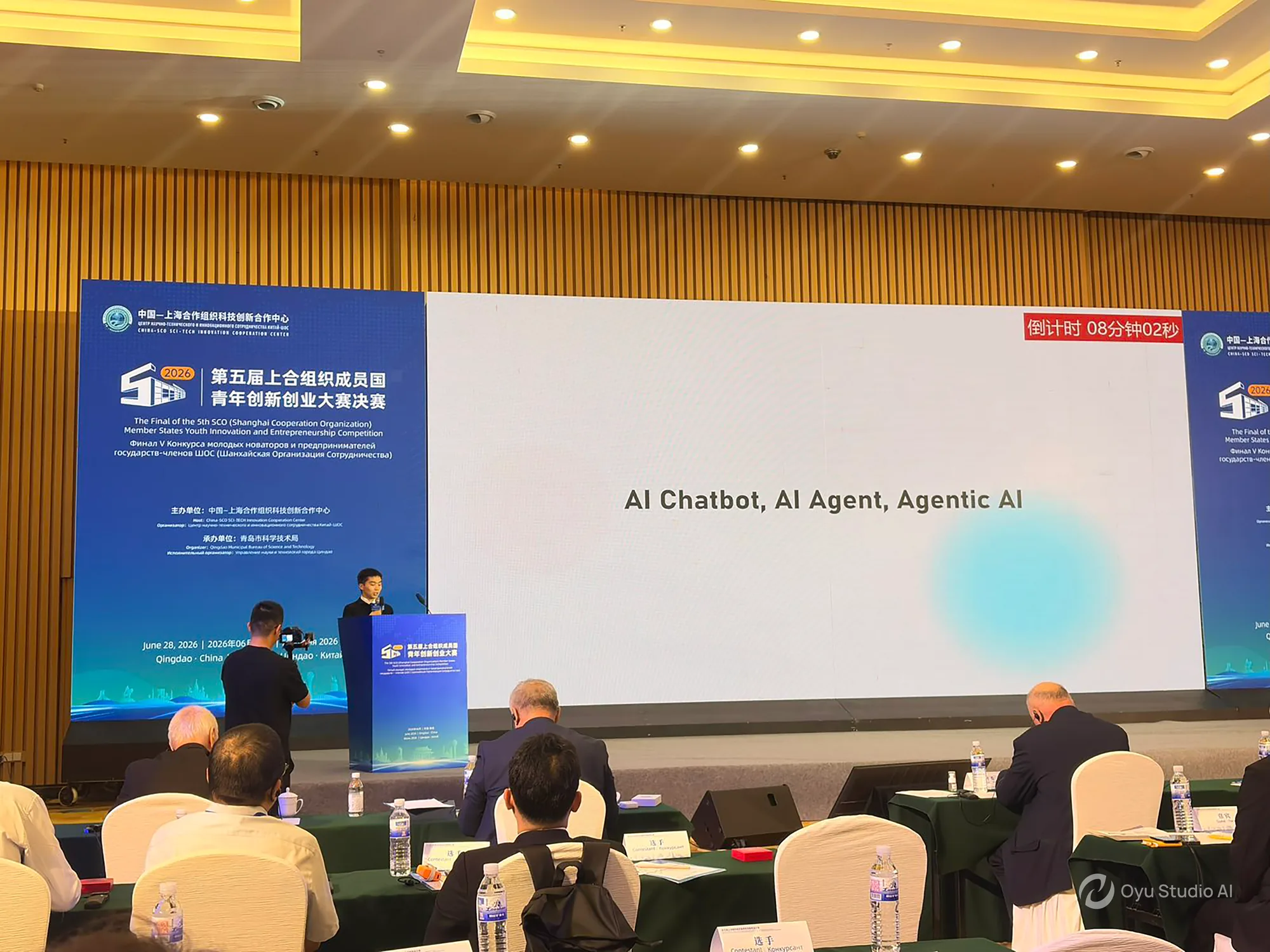
Oyu AI Receives an Excellence Award at the 2026 SCO Youth Innovation and Entrepreneurship Competition
Selected from 230 projects across ten qualifying regions, Oyu AI joined 20 finalists from eight countries in Qingdao and received an Excellence Award for its no-code data processing and visualization platform.
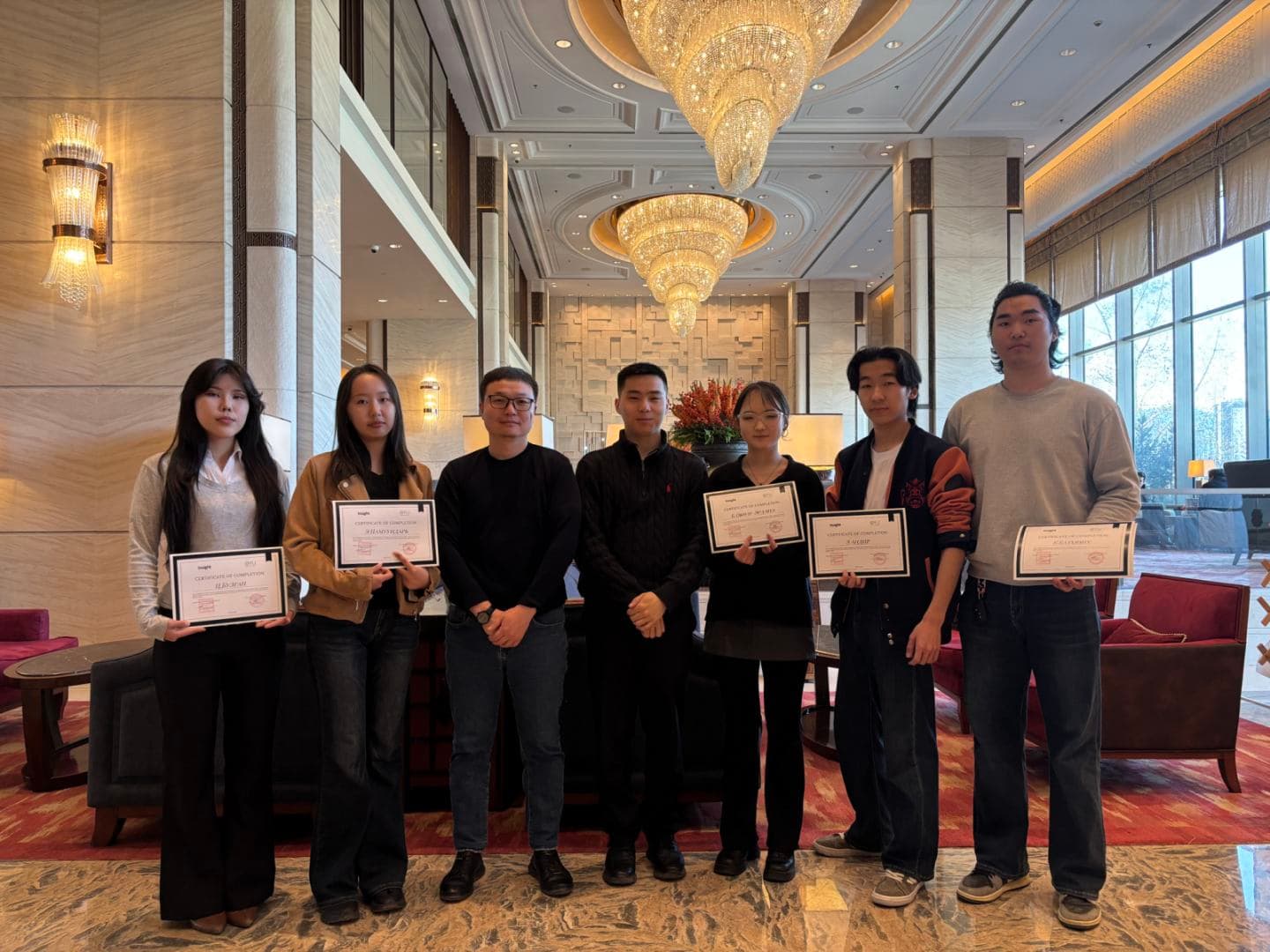
From Learning to Opportunity: Oyu Intelligence’s 2026 Internship Program
Close to 30 participants completed a 20-day applied AI, software, and data program run with Insight Research Company; two later received full-time offers from Oyu Intelligence.